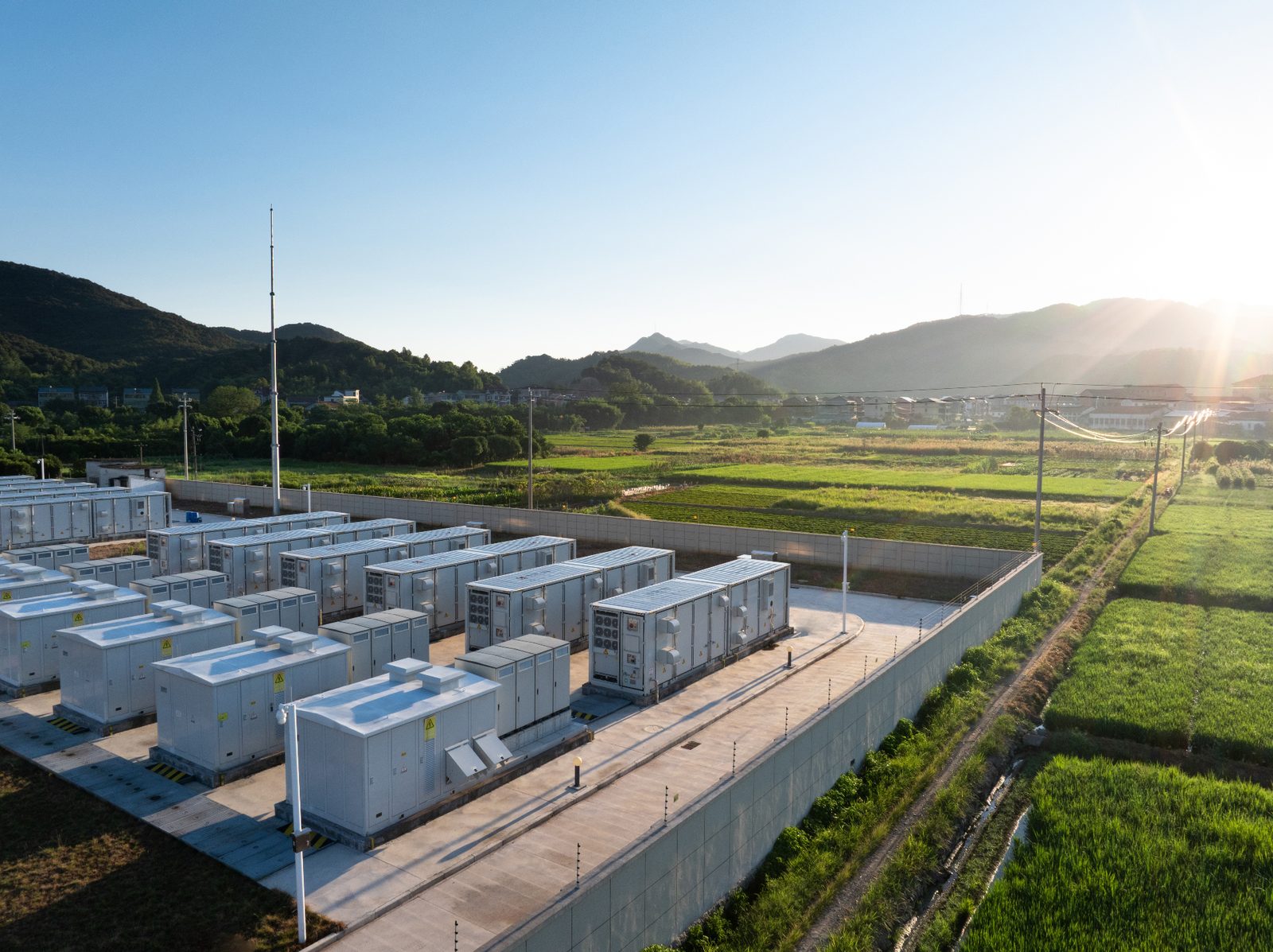
Why PPAs decide bankability
Power Purchase Agreements look like commercial documents. They are also the single largest determinant of project bankability, equity returns and ultimately whether a project gets built. After years of advising sponsors and lenders on PPA origination, structuring and valuation, our team has seen the same handful of issues drive most of the realized value variance.
Headline price is one input among many. Here is what matters alongside it.
Risk categorization, simply
Every PPA — busbar, virtual, hedge or merchant — sits on top of four risk categories.
- Generation risk: how much energy will the project actually produce, after technology risk and curtailment.
- Merchant risk: where market prices land, driven by supply and demand fundamentals.
- Basis risk: the gap between the settlement hub and the actual nodal price the project sees.
- Other risks: regulation, interconnection, and tax incentive evolution.
The structure of the PPA determines which of these the sponsor retains, which the offtaker takes, and which sit unhedged.

Where the industry is settling
After a period of experimentation, the market is settling back toward vPPAs and contract-for-differences structures, alongside long-term as-generated busbar PPAs with utilities. Bank hedges — fixed-volume swaps, proxy revenue swaps, proxy generation swaps, proxy revenue puts — remain part of the toolkit, but vPPAs are doing most of the work in the corporate offtake market.
The mechanics are familiar. The project gets a floor price (put) and a long-term contract, supporting financing. The corporate offtaker gets renewable energy credits and a sustainability story. The project gives away upside — sometimes entirely, sometimes via sharing mechanisms.
Implied REC value is the real signal
In a vPPA, headline PPA price minus long-term hub forecast equals implied REC value. That number tells you which side of the trade is paying.
A positive implied REC value means the corporate offtaker will likely make money on the contract; green attributes come on top. A negative implied REC value means the corporate is spending money to sign the vPPA on day one, with renewable certificates and green attributes justifying the cost.
Same project, two forecast scenarios, very different outcomes. A 200,000 MWh/year ERCOT solar asset on a 15-year $53/MWh vPPA settled at the Houston hub shows positive implied REC value of around +$4/MWh in a high-demand case and negative implied REC value of around -$5/MWh in a high-renewable-penetration case. Selecting the forecast — and pressure-testing it — is part of valuation, not a footnote.
Basis risk is rarely flat
Hub settlement and nodal production diverge. For the same project, there may be two ERCOT hub options were on the table: Houston and South hub. However, after a refreshed basis study, a Houston Hub at $53/MWh with -$4.00/MWh basis risk, or South hub at $50.50/MWh with -$0.75/MWh basis risk will change the perception on which is a better PPA Price. The "premium" hub realizes less revenue once basis is in.
Increasing solar build-out in ERCOT is also shifting on-peak pricing, eroding the solar capture rates that historical analysis would suggest. A modern PPA needs to address basis explicitly. Basis blowout mechanisms — converting the floating hub price to nodal plus PPA price when basis exceeds the PPA price — protect developers from negative-interval losses, capped by hours or dollars annually.
The negotiating points that move value
Security postings, Event of default mechanics, and other mechanics in the PPA drive real value for the projects. BTY helps developers reduces the exposure pre and post COD.
The takeaway
PPA value is rarely about getting the headline price right. It is about understanding which risks the structure transfers, which it leaves with the sponsor, and where the negotiated mechanics open or close real economic exposure over a 15- to 25-year contract.
BTY's PPA Advisory team supports developers on origination, valuation, structuring and negotiation across busbar PPAs, and vPPAs. Our broader Renewable Energy Services practice — Lenders Technical Advisor, Independent Engineer, M&A Technical Advisor and Owner's Advisor — brings the technical, commercial and financial lens that PPAs ultimately have to satisfy.
To discuss an offtake strategy, a contract under negotiation or an operating asset under review, contact us at bty.com.
Renewable energy commercial leader with deep expertise in utility-scale project development, offtake strategy and long-term power market negotiations. 7+ years in renewables origination across IPPs, a project flip shop, and a REC trading desk.